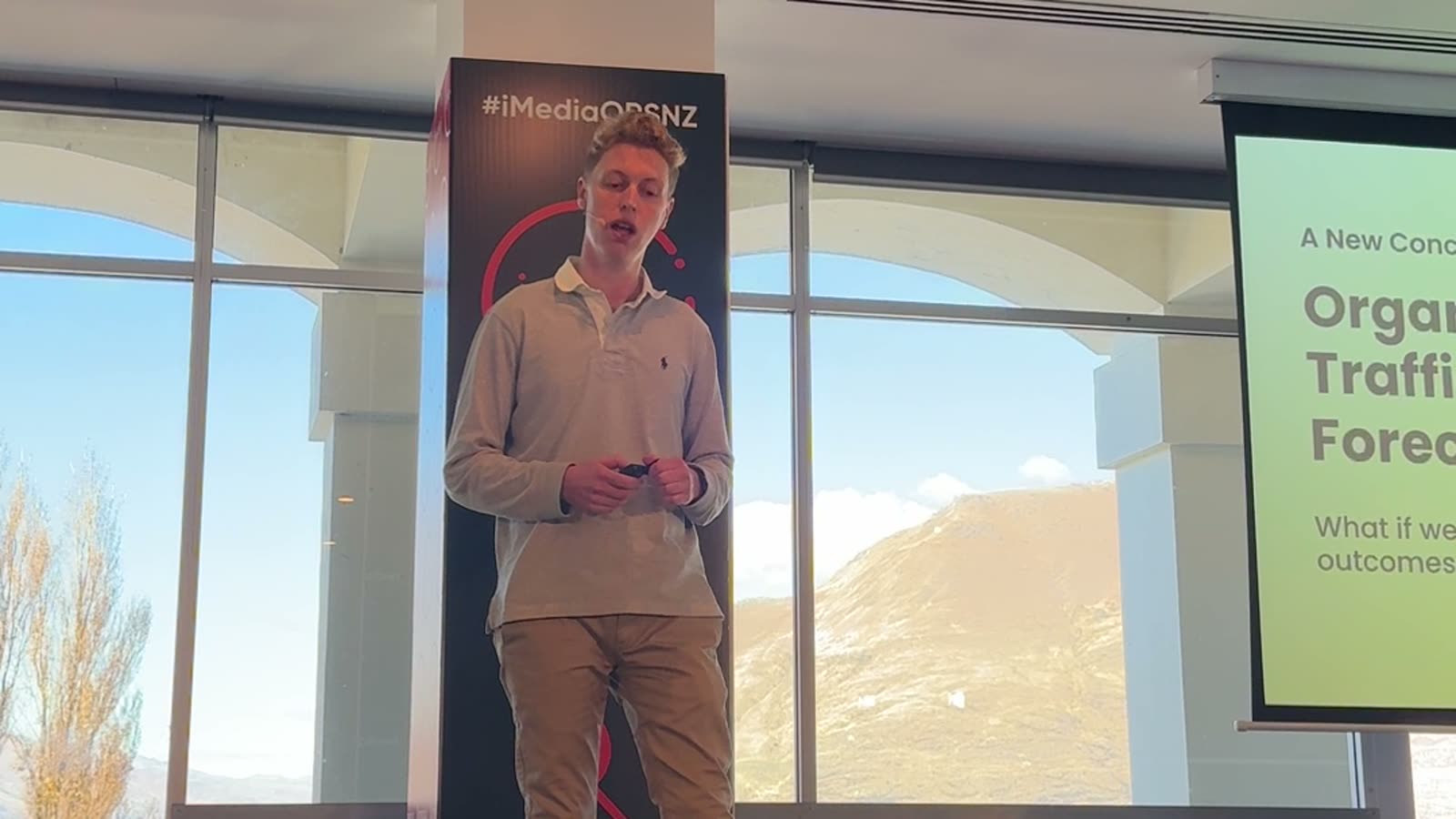
Ben McIntyre spoke at the Think Water Conference in Queenstown on 4 August 2026 about the question every brand is now asking: when someone describes their situation to ChatGPT and asks what they should buy, what decides whose name comes back?
The talk draws on an audit of more than 300 websites, and it lands on four signals. The one Ben spends the most time on is the one most marketing teams are not working on at all.
The short version
- ChatGPT can do three different things with your brand. It can cite you as a source, mention you by name, or recommend you. Only the third one is a commercial event.
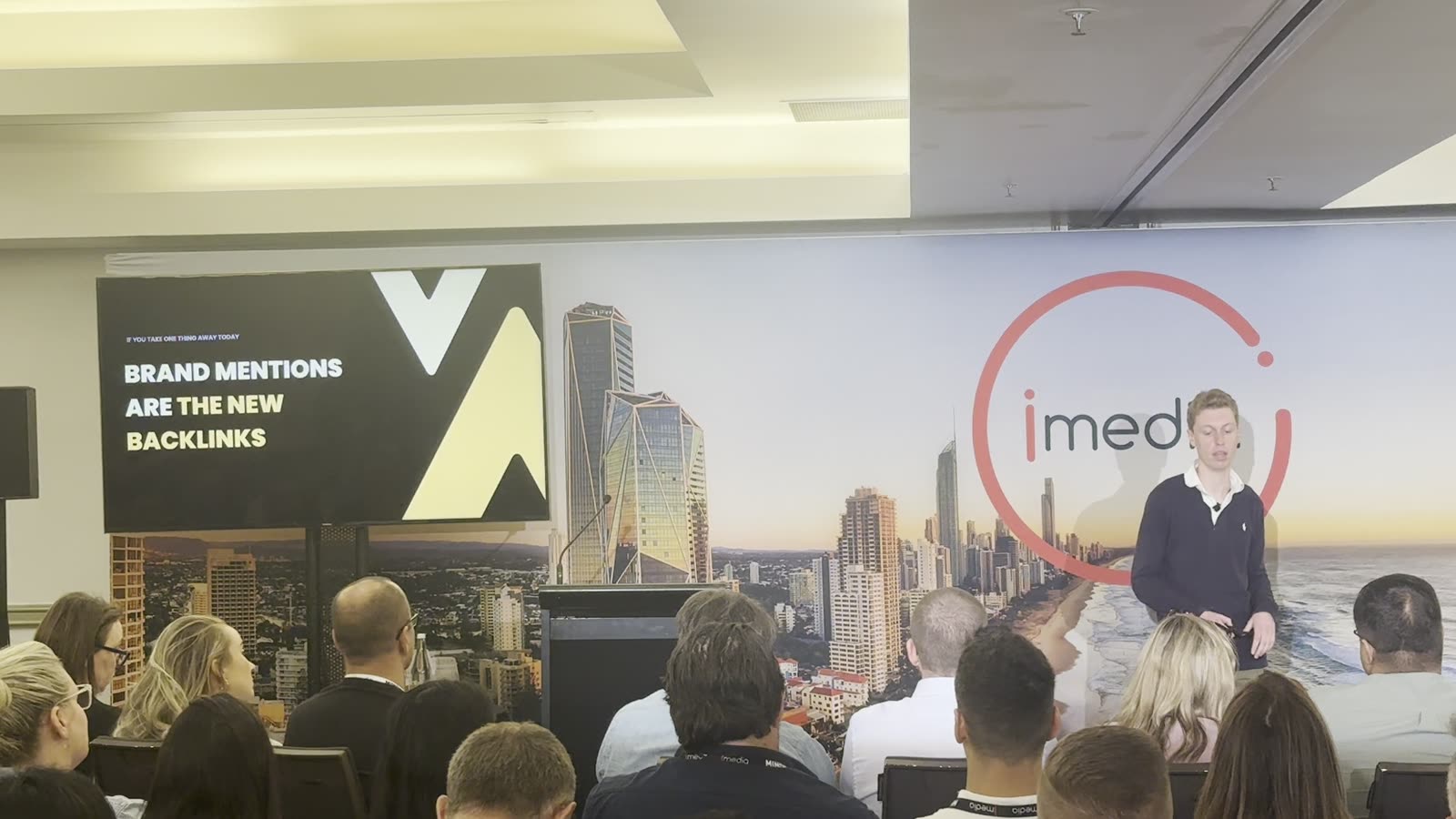
- Brand mentions have taken over the role backlinks used to play. A mention does not need to be a link for the model to count it.
- People prompt in full sentences carrying budget, constraints and context. Your content has to answer the sentence, not the keyword.
- Consensus gets you into the answer. Information gain, meaning something proprietary that nobody else has, is what makes you worth quoting.
- Outbound links now help you. The old instinct to hoard authority works against you here.
Two numbers that frame the problem
Ben opened with 87%, the share of AI search traffic that comes from ChatGPT alone, measured across roughly 75,000 websites. The point of the number is that AI search is not a fragmented field of a dozen platforms to cover. It is effectively Google and ChatGPT.
The second number was 900%, the growth in ChatGPT users over the previous twelve months. Adoption at that rate is why the channel stopped being a curiosity and started being a place where buying decisions get made.
Inside ChatGPT the response looks nothing like a search results page. No ads, no sponsored blocks, no blue links, no sidebar. One answer.
Cite, mention, recommend
Three things can happen to your brand in an AI answer, and they are not equally valuable.
Cite. Your website appears as a source supporting the answer.
Mention. Your brand name appears in the body of the response.
Recommend. At the end of the answer, ChatGPT says that for this person's situation, it would recommend you. That is where the commercial event happens.
Ben's framing: one answer, one verdict, your brand. He argues a ChatGPT recommendation now carries close to the weight of a warm referral from a colleague, because it is arriving at the same moment in the decision and answering the same question.
The four signals
The research points at four things the model weighs.
Signal 1: brand signals, the new backlinks
This is the one Ben says most brands are missing.
The model is looking across the open internet for repeated use of a brand name. Articles, podcasts, YouTube and video transcripts, listicles, press releases, product reviews. Every appearance is another place the model can see you.
For years search marketing optimised for backlinks, and specifically for how many distinct domains pointed at a site. ChatGPT does not work that way. What counts is how often your brand name appears. It does not have to be linked. It just has to be mentioned.
What follows is a Matthew effect. More mentions means the model sees you more often, which means it surfaces you more often, which produces more mentions. Brands that start early compound. Brands that start late are climbing against that compounding.
Signal 2: query alignment
People prompt differently from how they search.
In Google someone types "best running shoes". Three words, ambiguous intent, and Google fills the page with options.
In ChatGPT the same person writes: I am a beginner runner, I weigh 90kg, I have flat feet, I want a shoe under $200 that will get me through a 5k three times a week. Full sentence, stated budget, stated constraints, one answer expected. The slide line was: a keyword is a clue, a prompt is a confession.
The practical consequence is that your content has to carry the actual question and an actual answer beneath it. If someone asks for the best coffee machine for a small office and that exact question sits on your site with a real answer under it, the model has something to surface. This also means writing in the language customers use. Elevated experiences and best-in-class solutions give the model nothing to match against.
Signal 3: authority, meaning consensus plus information gain
Two ideas do the work here.
Consensus is your content agreeing with what every other credible site says. If you stock a product, your specifications match everyone else's. That agreement is what lets a model trust you.
Information gain is what you have that nobody else does. Proprietary data, your own testing, customer insight, reviews and testimonials that exist nowhere else. Consensus gets you accepted. Information gain is the reason to quote you specifically.
Signal 4: technical foundations, and the outbound link reversal
The site still has to be crawlable and indexable, which is unglamorous and non-negotiable.
The interesting part is external links. Search marketing spent years being protective about linking out, on the theory that it sends people away and leaks authority. In an AI context more outbound links help. Citations and links to evidence and third-party research are signals that your content is trustworthy. The old instinct is now working against you.
Two details that catch teams out
AI traffic skews to desktop. More than 65% of the AI traffic measured so far came from desktop devices. After a decade of mobile-first thinking, this is a channel where the desktop experience is doing most of the work.
The platform itself is unsettled. OpenAI controls how ChatGPT behaves and has changed direction repeatedly. SearchGPT, the Bing data partnership, its own crawlers, large-scale CMS integrations, in-chat checkout. As Claude and Gemini advanced, much of that was pulled back so OpenAI could concentrate on the core model. Anything built on a specific feature is standing on ground that moves.
Advertising is the change to plan for. It has already rolled out in the US and is arriving in New Zealand. Social platforms followed the same path: an audience product first, a commercial product the moment ads arrived. On the day ChatGPT carries advertising properly, it becomes a transactional platform, and the brands already established organically start from further up the list.
Is this just SEO with a new name?
Ben gets asked this constantly. His answer is that there are similarities, and the differences matter more, because the work is closer to marketing in general than to technical SEO. How many places can your brand be mentioned? Can you get into press coverage? Are customers talking about you positively? Do you appear in YouTube transcripts and email newsletters and the other surfaces the AI crawlers index? Those compound into whether you show up.
Case study: a 68% Mother's Day
Personalised Favours is a large Australian gifting business with sharp seasonality. Mother's Day, Father's Day, Christmas and New Year carry the revenue, with quiet stretches in between. For a business shaped like that, visibility during the peak is the whole game.
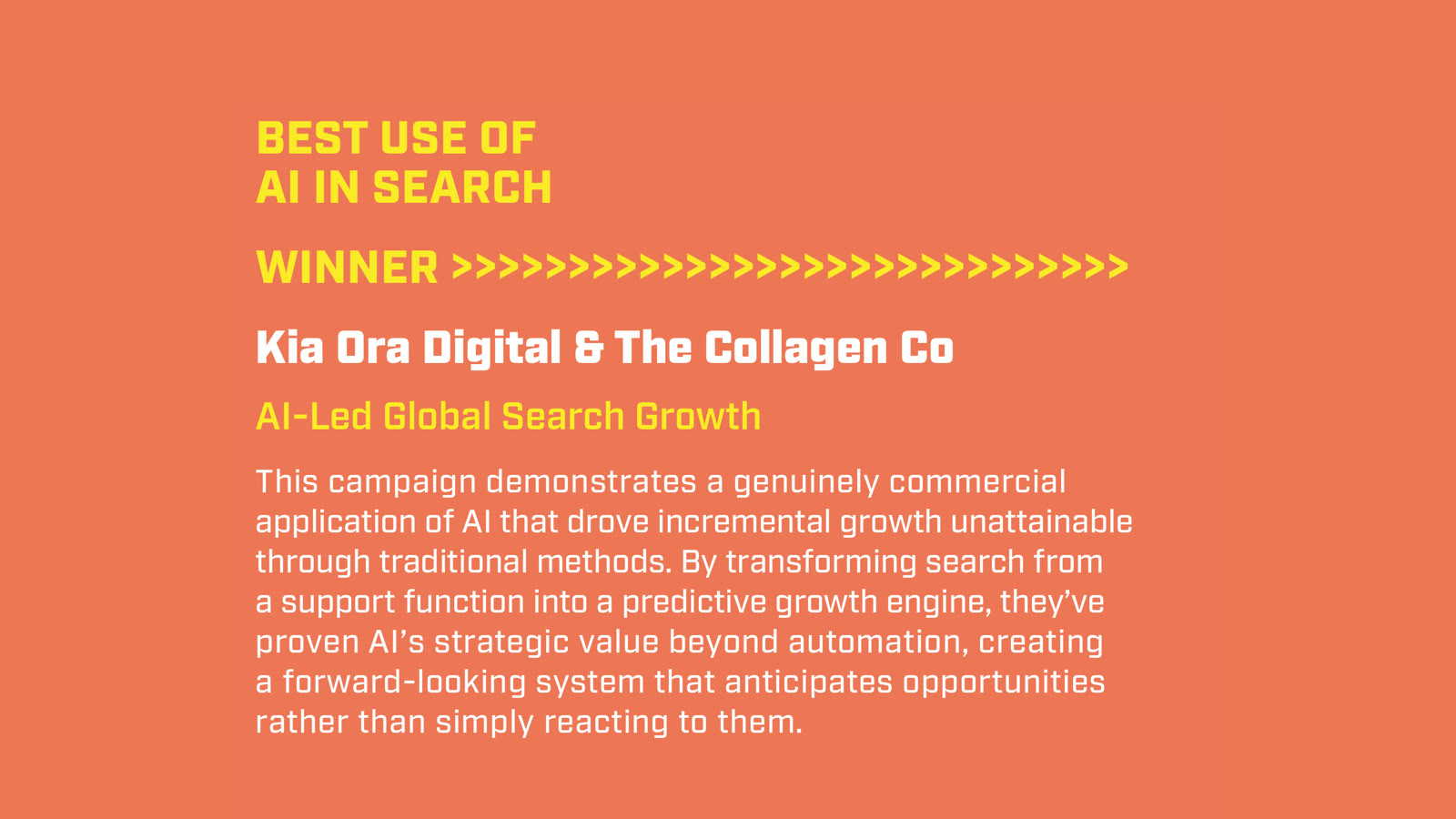
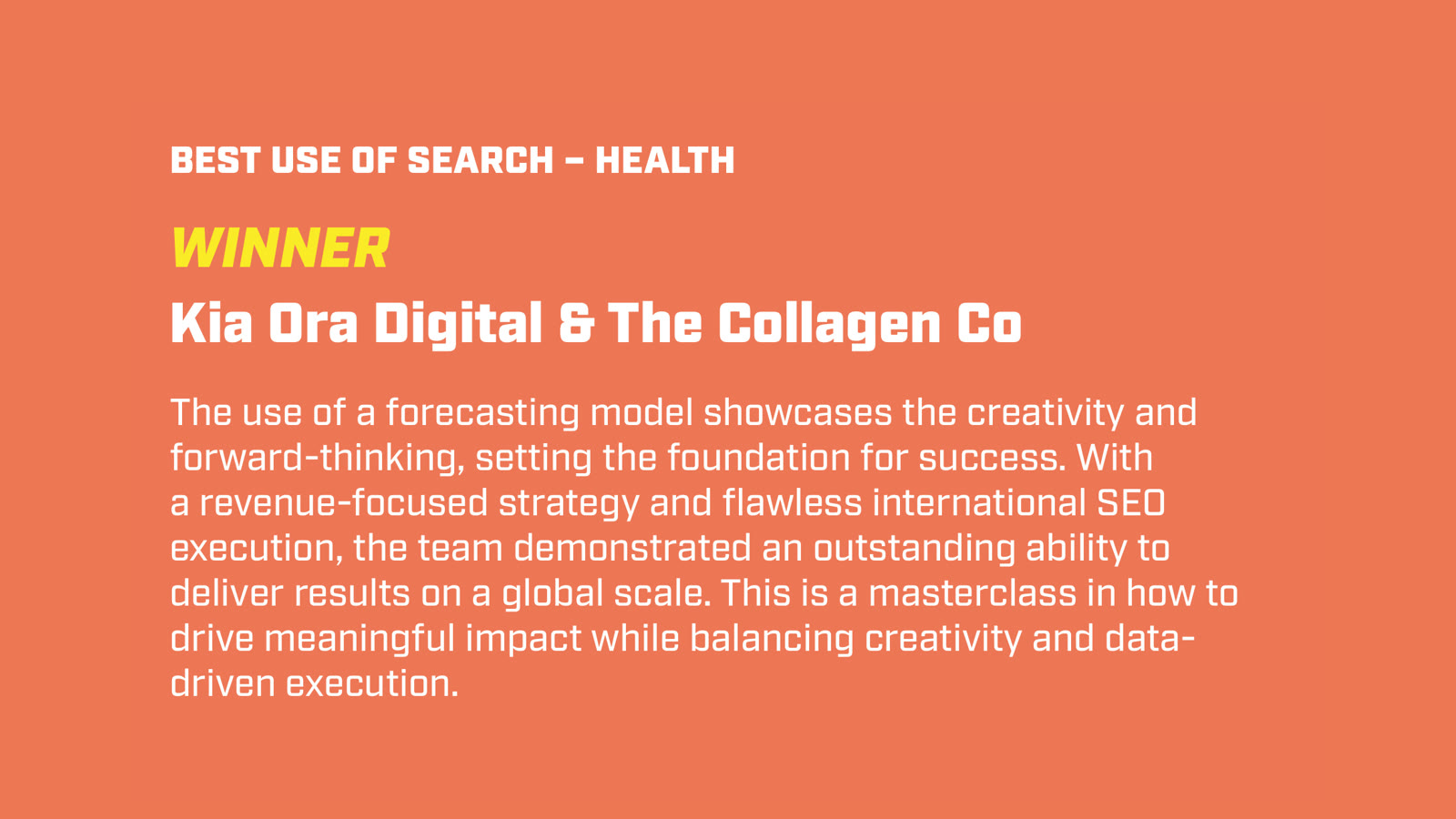
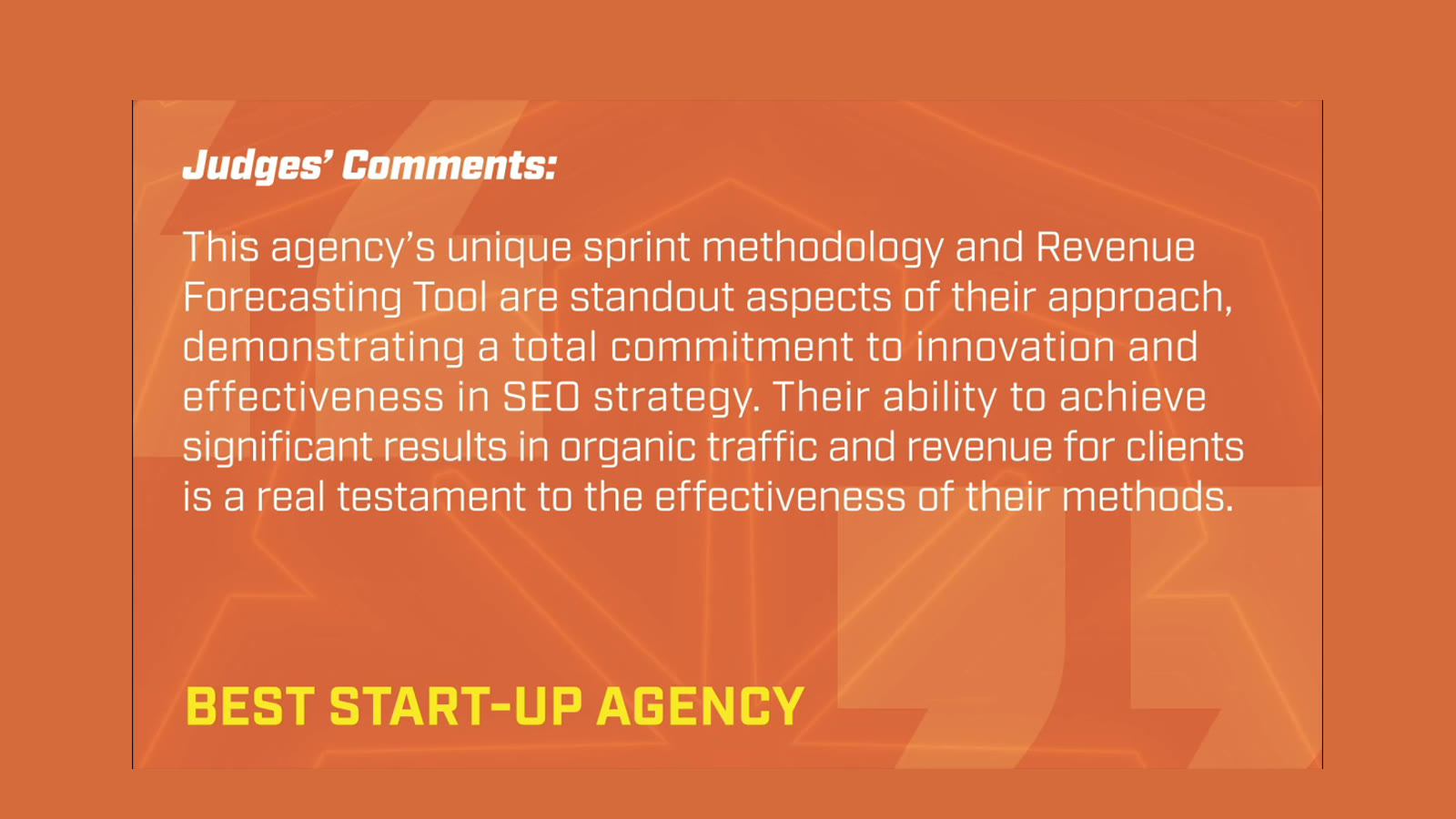
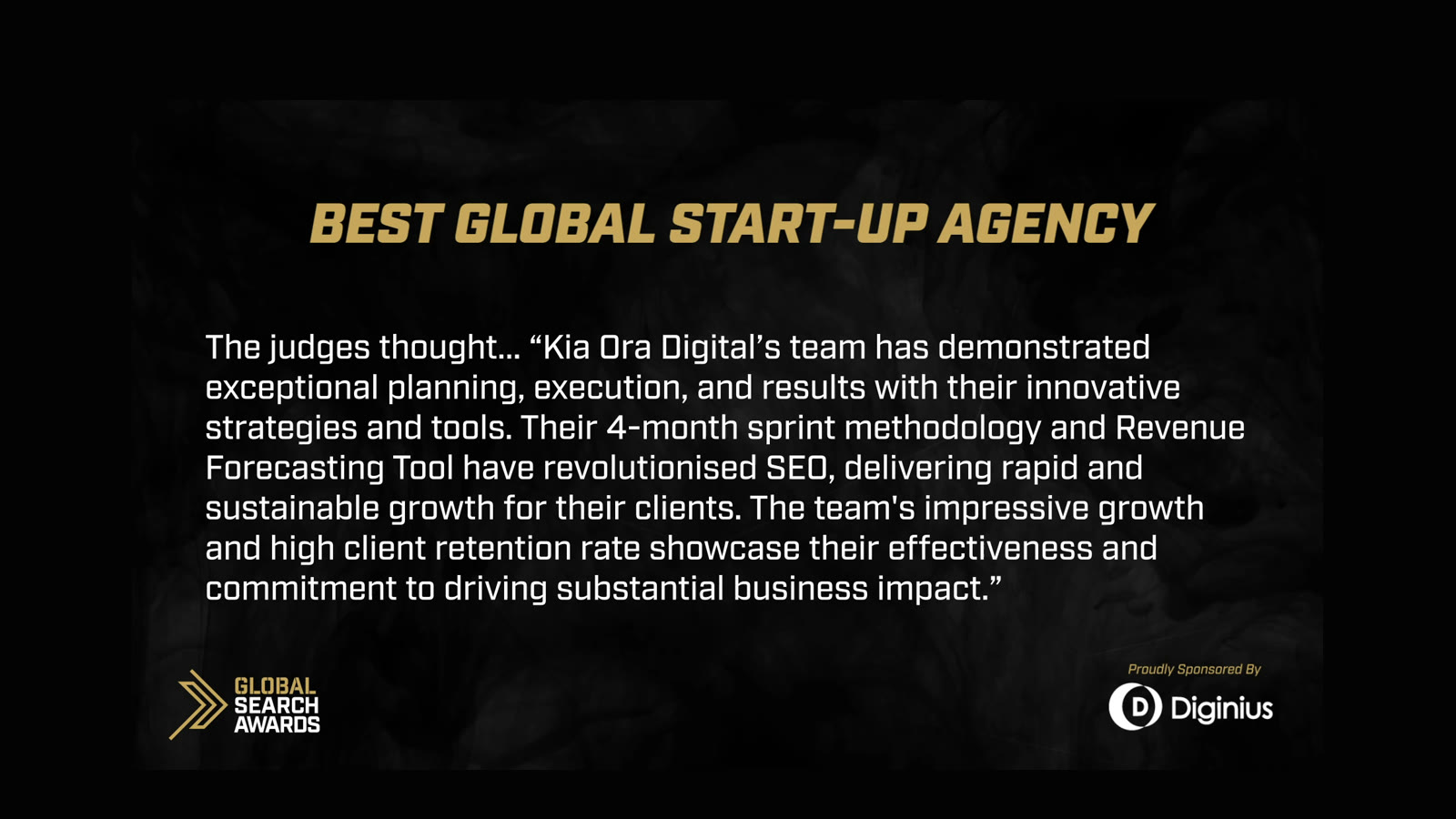
Kia Ora Digital has worked with them for a couple of years. The last twelve months focused specifically on AI search: strong link acquisition, digital PR placements to get the brand onto third-party sites and news publications, and rewriting site content to align with the questions people actually ask ChatGPT. The work started in May with the following May in mind.
The result across that Mother's Day period was a 68% increase in organic and AI search revenue, on a business that already transacted hundreds of thousands of dollars organically.
Questions from the room
Do the AI crawlers still respect robots.txt? Yes, and there is now
llms.txt as well, a file aimed specifically at large language model crawlers.
Standard robots rules still apply, so check you are allowing the crawlers you
want.
Do LLMs use hashtags? Not meaningfully. Hashtags were a way to search inside social platforms, Instagram in particular. Language models are going after depth, which points back at query alignment: full questions with full answers on your site.
Full transcript
Transcribed with Whisper large-v3-turbo and lightly cleaned. Filler sounds and stutters are removed, wording is otherwise unchanged. Speech recognition corrections are listed at the end.
Opening [00:00]
[00:00] ...to Queenstown. I'm lucky enough to actually live here in Queenstown, so welcome to my hometown. And Queenstown's putting on some pretty amazing weather, a bit of snow this morning, and hopefully some sun this afternoon, so almost four seasons in one day.
[00:21] But today we're going to be talking about why ChatGPT recommends some brands and not others. And just to give you a little bit of context, I'm one of the co-founders of Kia Ora Digital. We're a global search agency, so we help brands and businesses appear in all things search. That's historically been Google, but now ChatGPT is becoming one of the most important areas of focus for a lot of businesses.
[00:48] So just a quick hands up. I'm keen to get a bit of a read of the room. Who has used ChatGPT in the past to look at a product or a service, find out information?
[00:59] (Most of the room.) Good to see.
[01:03] And another show of hands. How many of you think that the businesses that you work in, or are a part of, have an AI search strategy?
[01:20] (Not quite so many.)
Two numbers that frame the problem [01:24]
[01:24] So I'm going to start off with this number, and that is 87%. And that's quite an important number. 87% is the percentage of AI search traffic that comes from ChatGPT alone. And this has been tracked over about 75,000 websites over the last several months.
[01:48] And it essentially tells us that when we think of AI search, there's really one channel that is important. And that is ChatGPT, right? It's not a case of Google versus a whole lot of other AI platforms. It's really Google versus ChatGPT.
[02:14] And another major number to keep in mind is 900%. And that is the growth rate that ChatGPT has grown. In the last 12 months alone, there's been a 900% increase in ChatGPT users.
[02:23] And so, although there are lots of AI platforms out there and lots of things changing in this space, ChatGPT is probably the one platform that is getting the most widespread adoption. And so it is a very important channel, especially to think about in terms of consumers and people that might be looking at doing research and finding products.
[02:50] So as I said, it's not necessarily ChatGPT versus a whole lot of other AI tools. It's now ChatGPT versus Google.
[02:55] And when you're inside ChatGPT, the response is quite different from traditional responses that people are used to in Google, right? There's not the same number of ads and sponsored material. There's no blue links. There's no sidebars. There's none of that. It's really just ChatGPT providing its response, which is really what is starting to matter.
Cite, mention, recommend [03:24]
[03:24] Now, ChatGPT can do a number of different things with your brand when you start to show up.
[03:32] So firstly, it can cite you, which means that your website appears in a ChatGPT response and it's pointing to you as a source of evidence in its answer.
[03:44] It can also mention you. It can put your brand name directly into the response itself, which is good.
[03:56] And number three, which is really what we're after, is it can recommend you. Often at the very bottom of a ChatGPT response, it'll say, "based on what you've told me, for your situation, I would recommend X." And that is really where the commercial event happens. That is where you want to be.
[04:17] One answer, one verdict, your brand, right? As you can see here in the example, you want to be the business that gets recommended.
[04:34] And in fact, being recommended by ChatGPT, some people now argue, could be considered just as strong as a warm referral from a friend or a colleague, right? People are going to ChatGPT to ask for an answer when they might have historically gone to someone else in the business, or to a friend, or found a recommendation elsewhere. So again, it's becoming a very powerful part of people's behaviour and research and buying decisions as well.
Where this research comes from [05:03]
[05:03] So you might be wondering, how do we know anything about this? And I'll just give you a little bit of context.
[05:09] So we've been running a fairly significant research project within our marketing agency for the past several months. And we've actually audited over 300 individual websites. And we've collected a whole lot of data from within those sites to understand the prompts and the things that ChatGPT is starting to surface, and how the impact of different things that different businesses are doing has an impact on whether or not ChatGPT recommends you or not.
[05:46] I've also personally spent over 100 days on the road travelling across the US, Europe, a lot of time in Australia as well, and have been speaking to a lot of marketing executives and people that are really close to the AI development that's happening, especially in the US, getting real live insights on what's happening.
[06:09] And the other thing that we're starting to do now is we're actually running a global research project, lucky enough to have some quite large businesses that we're working with in a very close relationship across a number of countries. And we're reporting on all of the things that they're doing within their marketing strategy and monitoring the change and the results that are starting to show in ChatGPT. So we're putting that together as a proper research paper, which we'll be able to share with larger businesses as that starts to come together.
[06:40] But there's four key signals that ChatGPT really weighs in on when it recommends a brand or a business, and I'm going to talk through what some of these are now. We've got brand signals, query alignment, authority signals, and technical factors, and I'll dive into each one of these in a little bit of detail.
Signal 1: Brand signals [07:01]
[07:01] So brand signals is one of the most important things that now matters for businesses, and it's actually what a lot of people are completely missing.
[07:10] ChatGPT is really looking at all the information out there on the internet, and it is looking to see where can it find repetitive use of a particular brand or brand name.
[07:28] So your brand can show up, your business name can show up, in so many different places, right? It can appear in articles online, and podcasts, and YouTube or video transcripts, product listicles, and press releases, product reviews, all sorts of different places, right? The more times that you can get your brand mentioned, the more times ChatGPT can see you.
[07:57] And for years, people like myself in marketing have been focusing on getting these things that we call backlinks, which are where your website gets featured on another website, right? And we've been worried about how many times different domains will link to you, right?
[08:15] The thing is, ChatGPT and most of the AI models don't care about any of that, right? It works completely differently to the way that Google has historically worked. Instead, as I mentioned, it's looking at how many times is your brand name appearing and how many times can it see it. It doesn't have to be linked, it just needs to be mentioned.
[08:33] And what happens is this thing which I explain to a lot of people, called the Matthew effect, where the rich essentially get richer, right? The more times that you get mentioned externally, the more times ChatGPT can see you. And the more times ChatGPT can see you, the more it then starts to surface you, and round and round this goes.
[09:02] And those businesses and brands that can get a head start on this are typically going to be the ones that will dominate and have a lot more authority. It only becomes harder for those to catch up who haven't been focusing on it.
[09:14] So if there's one thing that I stress to everybody when I'm talking about how to get brands mentioned by ChatGPT, it is that brand mentions are number one. They're the key, and they are now the new backlinks in terms of search engine marketing.
Signal 2: Query alignment [09:35]
[09:35] Number two is what we call query alignment. And this is that the way that people now search in ChatGPT is quite different to the way that people have historically searched in the likes of Google. People use prompts, in full sentences, with context, right?
[09:51] I'll give you an example. In Google, someone might search "best running shoes", right? You use a select number of keywords, which provides Google a bit of a clue as to what the user is looking for.
[10:06] But in ChatGPT, people become a lot more personal. They might say, "I'm a beginner runner, I weigh 90 kgs, I have flat feet, I want a shoe for under $200 that'll get me through a 5k run three times a week," right? There's so much more context in that.
[10:27] And so for larger businesses, especially with more complex product ranges and so on, these sorts of things are going to start to become more and more important. It's a little bit like someone going into a store historically and asking someone behind the counter a question about what they're looking for. And now they're going to something like ChatGPT in order to get that same information.
[10:49] So the other thing is, Google shows you related content that is related to what you are prompting as a keyword, but ChatGPT actually gives you the answer, right?
[11:06] And so what this means is that the content that you have on your website really needs to match exactly what customers or consumers are searching, or putting into ChatGPT as a prompt, right? If someone asks ChatGPT, "what's the best coffee machine for a small office?", just as an example, and your website has that exact question with an answer beneath it, then ChatGPT can surface that and it'll bring it up.
[11:38] So it's using the content that you use. It's using your words. So marketing people need to use less typical marketing jargon, right? Like "elevated experiences" and "best in class solutions" and so on. And we really need to just get back to plain language that consumers are using day to day.
Signal 3: Authority signals [12:08]
[12:08] The third thing is authority signals. So, is your content trusted? And can ChatGPT see that you have got evidence and research-backed information, right?
[12:18] There's two things that I want to talk about. There's this thing called consensus and there's information gain.
[12:26] Essentially, consensus means that your website tells the same information that every other website has, right? If you stock products or have product information, you've got this information that every other website likely has as well, which means you've got consensus.
[12:41] However, what's really important in an AI world is information gain, right? If you can add proprietary data, if you can add something that nobody else has, even product reviews or testimonials, customer insights, those sorts of things, then what that does is it gives you something new. And that is what the AI models are always looking for.
[13:04] They're looking for: can we match information to what everyone else is saying, to ensure that we have consensus? And then, what new information do we have that helps us to gain more knowledge?
Signal 4: Technical foundations [13:19]
[13:19] And the final thing that is really important, most people's nightmare, is the technical foundations. And ultimately your website needs to have the right technical foundations in order for ChatGPT to be able to crawl it and index it and ensure that it can be found.
[13:40] But there is just one thing that I want to dive into. And that is, in the past, we've always been very protective of having external links on a website, right? We don't want to link out too often, because what that can do is it can mean that people are going off your website, and it can leak what we call authority, which is what Google looks at.
[14:04] But in an AI, or in a ChatGPT, environment, it's actually really important to have more outbound links, right? And have research that links out to tests and to information from other sites. So citations and any evidence that you can add helps the model to show that you're more trustworthy and authoritative. So that is really important as well.
The desktop skew [14:34]
[14:34] The other thing to just touch on is that of all of the data collected so far, over 65% of all of the AI traffic is coming from desktop devices.
[14:43] And that's important, because in an era where we've been primarily focused on mobile devices, while that still will be important, AI and ChatGPT is typically being used more often in desktop environments. So it still is important to think about desktop optimisation as well, and making sure that you've got good optimisation for the traditional desktop devices.
ChatGPT is powerful, but unsettled [15:12]
[15:12] And the other thing is that ChatGPT is very powerful, right? But it's also very unsettled. And it's a bit of a closed system in many ways. OpenAI are in control of it. They can choose how it operates and how it responds. And there's still many parts of the whole AI ecosystem that are still being worked out. And there's been a lot of change, right?
[15:47] In the last couple of years, ChatGPT launched this thing called SearchGPT initially, which was where they brought search results from the web into ChatGPT. They did a partnership with Bing to bring a whole lot of data in from Microsoft and Bing. They then launched their own crawlers, where they could crawl websites themselves. They've started doing all of these large-scale CMS integrations so that people could start to bring products in to start selling through ChatGPT. And they launched this idea of doing a checkout, where customers could purchase directly within ChatGPT and not leave the ChatGPT window.
[16:36] But then, as some of the other models started to become more advanced, like Claude, and Gemini by Google, Sam Altman, the CEO of OpenAI, goes, "oh, we need to retreat back to the core model. That's where our focus needs to lie, because some of the others are getting ahead."
[16:50] And so a lot of that stuff has been scrapped for the time being, and it's not a focus any longer. So there's a lot of change, and it's happening at rapid pace. So keeping on top of the changes is what's really important.
AI advertising is coming [17:04]
[17:04] And the other big thing is that AI advertising is coming. This has already started to get rolled out. It's happening quite widely in the US and in other international countries. It's coming into New Zealand. We've just started with some of our clients starting to look at what an AI advertising strategy looks like.
[17:28] But ultimately, if you think about some of the historic changes that have built up over time, you think of social media, think of Facebook and Instagram and so on, TikTok. Those platforms started out as social media platforms for people to share content. And as soon as advertising started to roll out, they then very quickly turned into commercial platforms that people use to get in front of audiences and to sell products through. And it's become a massive revenue stream for many businesses.
[17:53] So the day that ChatGPT truly starts to roll out advertising in a commercial sense, then ChatGPT will become a much more transactional platform.
[18:06] And ultimately, if you can be ahead organically, have your content being indexed and found, and have your brand being mentioned and recommended, then you've got a much stronger chance of being higher in the list, and others will take longer to catch up.
Is this just the new SEO? [18:27]
[18:27] So, a lot of people out there, and I know this is probably a bit more of a marketing spiel, but a lot of people say to me all the time: isn't ChatGPT optimisation, or getting found in ChatGPT, just the new version of SEO, search engine optimisation?
[18:40] And while there's many similarities, there's actually quite a lot of differences. And really it's marketing in general. It's: how many times can we get your brand mentioned in as many places as possible? How can you get found in press releases? How can you get customers talking about your brand positively? How can you show up in YouTube transcripts, and email newsletters, and all those places that ChatGPT and the AI crawlers can start to index?
[19:12] They're all having a compounding effect on how your business will show up in AI.
Case study: Personalised Favours [19:25]
[19:25] And so I thought I'd just share a super quick case study, because I've been talking a lot about the theory, and we're now starting to run these strategies with a lot of clients that we work with, primarily businesses that do sell in an online environment.
[19:38] It's quite a large business in Australia. It's called Personalised Favours, and they're a gifting business. They do personalised gifts for people.
[19:50] And they've got a few periods of the year where a lot of their revenue is driven, right? The gifting period. You've got Mother's Day, Father's Day, Christmas, New Year. They're the peak seasons, and then little events in between where there's not so much demand.
[20:13] And I was thinking, many of your businesses in the room probably also run similar seasonality, where there'll be peak seasons and low seasons and so on. And so it's just really important for this business in particular to make sure that during these peak seasons they are always showing up and they're up front and centre.
[20:39] And ultimately they say, search visibility isn't just a marketing channel, it's really the whole game. Being visible within both Google and within ChatGPT and any of the AI platforms is really the most important and crucial thing for them.
[21:02] So we've worked with these guys for a couple of years now, and just in the last 12 months we've been really focused on an AI strategy. And that AI strategy has involved focusing on really strong link acquisitions, doing digital PR placements, getting them found in as many third-party websites and news publications as possible, and ensuring that all of the website content is really aligned to the questions that people are asking in ChatGPT.
[21:37] So we've been doing that really extensively for about 12 months. We started about May last year, and our aim was to try and have a really large Mother's Day this year in May.
[21:53] And through all of the work that we were able to do, and this business transacts quite a reasonable amount of money, especially in an organic environment, hundreds of thousands of dollars, we were able this year to achieve a 68% increase just during that Mother's Day period alone, through organic and AI search revenue, right?
[22:11] And so that's quite a significant increase in revenue in an online environment. So it just does show you that by having a strategy, and by optimising and by focusing and prioritising the AI and organic search channels, there's a lot of revenue opportunity and a lot of opportunity to really drive growth in a business.
Offer and close [22:39]
[22:39] So, a couple of things, just before I close out and ask if there are any questions.
[22:45] We have put together what we call a bespoke ChatGPT marketing playbook. And what that is, is essentially a really in-depth deep dive which provides a whole lot of insight as to where ChatGPT is currently recommending you or your competitors, and the prompts that are being searched within ChatGPT. It also provides a whole lot of insight as to how to start getting recommended by ChatGPT, and it's bespoke specifically to the businesses that we're running it for.
[23:17] So, very happy to offer that to anybody here in the room. Just connect with me and reach out if you'd be interested in having that. It's completely free, and just really insightful.
[23:28] And the second thing is, if you're navigating the space or want to chat more in depth about anything to do with AI, I'm all ears, and we'll be sticking around for a while. So if anyone would like to have a chat, you're all welcome to do so.
[23:41] So I think I've got just a few minutes left, but yeah, any questions on the topic?
Q&A [23:52]
[23:52] Question: Do the AI crawlers still respect that robots.txt file?
[24:00] Ben: ...llms.txt, yeah, which essentially is a text file that's specifically for the LLM crawlers, the large language models. So yeah, typical robots still applies as well, making sure that you allow the crawlers to crawl. So there's a few new things that have kind of eventuated.
[24:30] Ben: Any other questions?
[24:38] Question: Do the LLMs search hashtags any more?
[24:43] Ben: Probably more of a social thing. Not probably so much. The hashtag thing was more of a way to search for keywords within social media, so Instagram primarily.
[24:58] Ben: I think with your natural language models, you're really wanting to try and get as much depth of content as possible. So that's like those query alignments, getting full questions and answers into your site, because they're really going much deeper than the surface-level searches that have historically been the case in social media, within Instagram and whatnot.
[25:29] Ben: Cool. Any other questions?
Wrap [25:33]
[25:33] Ben: Very good. By all means, there's a code there for my LinkedIn. If you would like to connect, feel free to take a photo of that. Send me an email if you wish to find out any more information. And hopefully you've learned something new today about ChatGPT. Thanks very much.
[25:49] Host: To the preferred suppliers in the room, if you do want Ben's details, please reach out to John as well and he can connect you guys through email. Thank you again, Ben. That was great.
[26:03] Ben: Thank you very much.
[26:05] Host: Thank you, guys. Thank you.
(End of recording, 26:08.)
Transcription notes
Speech recognition errors that were corrected, so they can be audited against the audio.
| Timestamp | Whisper heard | Corrected to | Confidence |
|---|---|---|---|
| 00:29 | "Kielda Digital" | Kia Ora Digital | High |
| 25:47 | "Chachipiti" | ChatGPT | High |
| 24:02 | "used in text" | llms.txt |
High |
| 19:07 | "AI callers" | AI crawlers | High |
| 17:53 | "revenue strain" | revenue stream | High |
| 25:22 | "service level searches" | surface-level searches | High |
| 14:04 | "it can link what we call authority" | it can leak what we call authority | High |
| 17:30 | "changes that have built up a car" | changes that have built up over time | Moderate |
| 24:38 | "Do the jaguars" | Do the LLMs | Low, garbled |
| 24:57 | "Instagram and Instagram's primarily" | Instagram primarily | Moderate |
At 20:04 Ben lists four gifting peaks and then calls them "the three peak seasons". That is a slip in the room, not a transcription error.